25 มิ.ย. 2569
7 Installation Risks gg
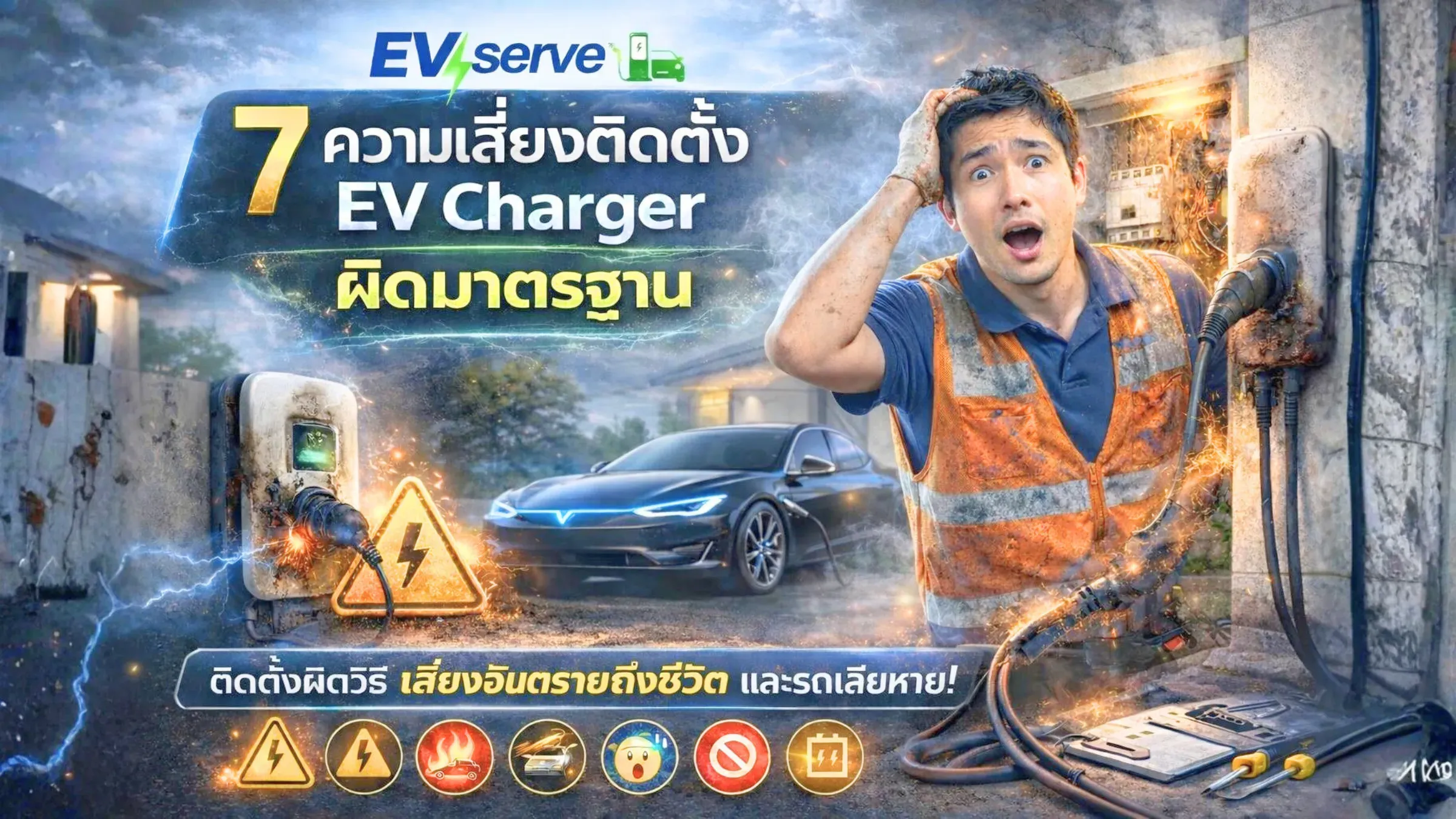
7 Serious Risks of Non-Standard EV Charger Installation
Over the past few years, EV charger installation in Thailand has grown rapidly — but so has the number of cheap, below-standard jobs being done.
Many of these cases have ended in house fires, electric shocks, damaged equipment, and voided vehicle warranties. Below are the seven serious risks every EV owner and business operator must understand.
Risk 1: Fire from Substandard Wiring and Connections
Some installers use undersized cables or wiring that does not meet certified standards.
- Wires overheat
- Insulation melts
- Sparks occur
- Fires ignite inside walls
Electrical fires related to EV charging systems often start silently without warning.
Risk 2: Electric Shock from Poor Fault Protection
- No RCD installed
- Use of counterfeit or uncertified protective devices
- No post-installation testing
When electrical leakage occurs, users may be directly exposed to live current — a potentially fatal hazard.
Risk 3: Breakers That Fail to Trip During Overload
Incorrect breaker sizing or unsuitable trip curves can result in:
- Overcurrent without shutdown
- Charger failure before protection activates
- Damage to the entire electrical panel
System-wide failure is a common outcome of poor breaker selection.
Risk 4: Inadequate Grounding System
Many installations skip proper earth resistance measurement or grounding rod installation.
- Fault current cannot safely discharge
- RCD protection may malfunction
- Electric shock risk increases significantly
A safe grounding system should measure below 5 ohms.
Risk 5: Equipment Damage from Voltage Surges
Without a Surge Protection Device (SPD), events such as lightning strikes, power surges, or voltage drops can instantly destroy the charger’s internal electronics.
Repair costs can range from tens of thousands to over a hundred thousand baht.
Risk 6: EV Damage and Voided Warranty
- Battery Management System (BMS) malfunction
- Accelerated battery degradation
- Vehicle electrical system failure
Many manufacturers will deny warranty claims if non-standard installation is identified.
Risk 7: Legal Liability
If an accident occurs — such as fire or personal injury — responsibility may fall on:
- The homeowner
- The installer
- The contracting company
This may involve both civil and criminal liability.
Warning Signs of a High-Risk Installation
- Unusually low pricing
- No contract or warranty documentation
- No site survey before installation
- No system explanation provided
- No certified credentials
These indicators often signal long-term safety risks.
The Safer Choice
EV-SERVE follows engineering standards without cutting corners to compete on price.
- Certified engineer inspections
- Certified standard equipment
- Full system testing
- Detailed installation reports
- Installation warranty
Summary
A quality EV charger installation is not just about functionality — it is about long-term safety.
Short-term savings can lead to serious losses in the future. Choosing professional installation protects both life and property.