26 มิ.ย. 2569
Is Home Charging Worth It?
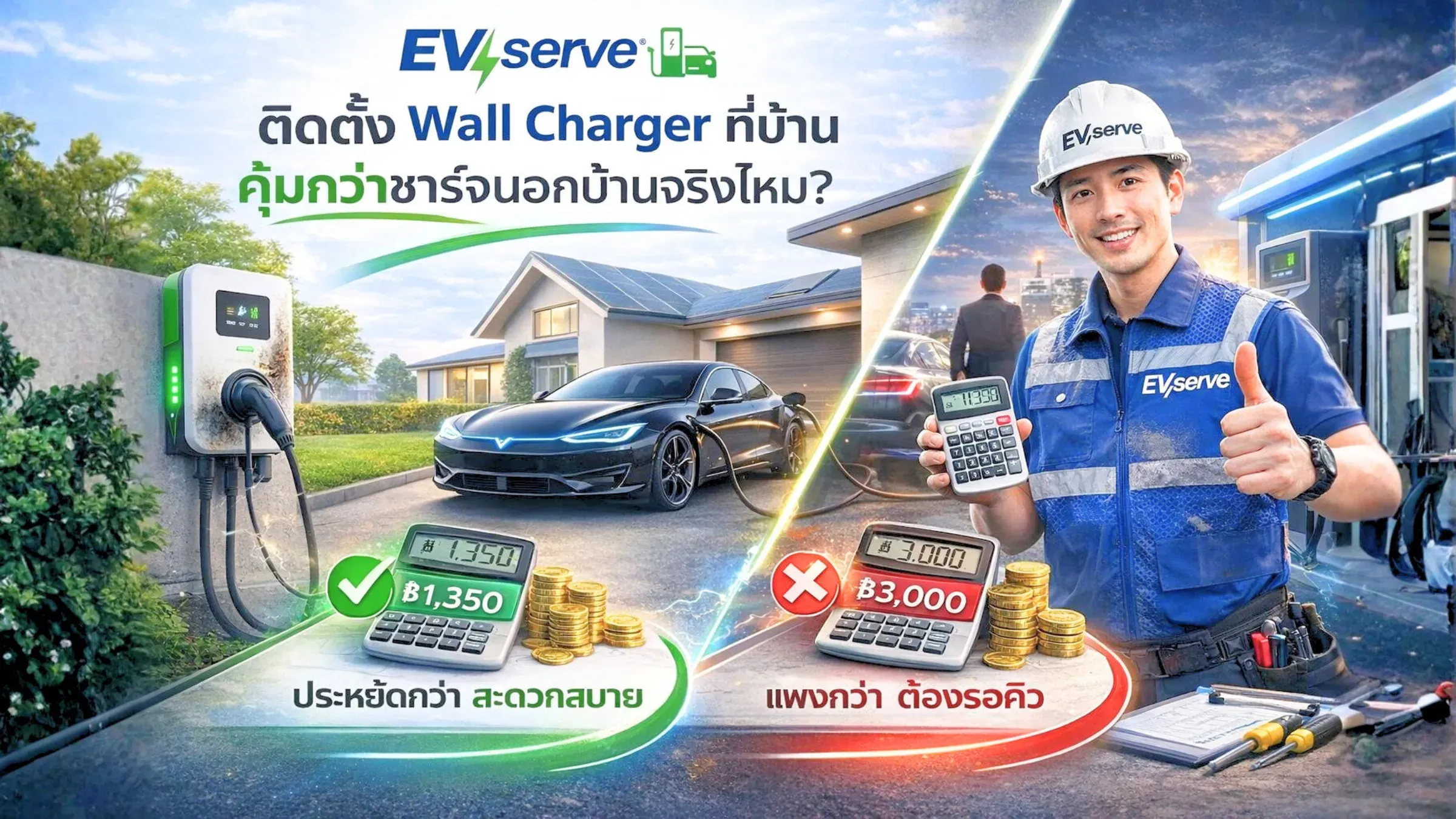
Home Wall Charger vs. Public Charging: A Clear Cost Comparison
When you switch to an electric vehicle, one key question quickly follows: should you install a Wall Charger at home, or is public charging sufficient?
Although installation requires an upfront investment, long-term savings are substantial. Below is a clear breakdown of the real costs.
Upfront Cost of Installing a Home Wall Charger
| Item | Estimated Cost |
|---|---|
| 7.4 kW Charger Unit | 18,000 – 30,000 THB |
| Installation & Wiring | 5,000 – 15,000 THB |
| Electrical Components | 3,000 – 8,000 THB |
Total initial investment: approximately 25,000 – 50,000 THB. A properly installed system can last 5–10 years or longer.
Real Cost of Charging at Home
- Average electricity rate: 4 – 5 THB per kWh
- Average consumption: 15 kWh per 100 km
- Driving distance: 1,000 km per month
Monthly usage: approximately 150 kWh
Monthly cost: 600 – 750 THB
Real Cost of Public Charging
| Charger Type | Average Price |
|---|---|
| AC Public Charger | 7 – 10 THB per kWh |
| DC Fast Charger | 9 – 15 THB per kWh |
Using 150 kWh per month at 10 THB per kWh results in about 1,500 THB monthly. If relying mainly on DC fast charging, costs can exceed 2,000 THB per month.
Annual Cost Comparison
| Category | Home Charging | Public Charging |
|---|---|---|
| Electricity Cost per Year | 7,200 – 9,000 THB | 18,000 – 24,000 THB |
Estimated annual savings: approximately 12,000 THB by charging at home.
Payback Period
Assuming a 35,000 THB installation cost and annual savings of 12,000 THB, the system pays for itself in roughly 3 years. After that, the savings continue year after year.
Additional Benefits of Home Charging
- No waiting in line
- No driving out of your way
- Overnight charging convenience
- Better long-term battery health from steady charging
- Increased property resale value
Limitations of Public Charging
- Higher electricity cost
- Possible waiting time
- Unavailable or malfunctioning stations
- Time spent traveling to charging locations
- Dependence on external infrastructure
Public charging works best as a supplement — not as a primary long-term solution.
When You Might Not Need a Home Charger Yet
- You live in a condominium with free charging
- You drive less than 500 km per month
- You primarily use a company vehicle
For regular EV users, however, installing at home is typically the most cost-effective choice.
Summary
A home Wall Charger is a one-time investment that delivers long-term savings. Most users break even within 2–3 years and enjoy reliable use for 7–10 years.
If you drive your EV regularly, installing a home charger is a practical and financially sound decision.